

Case Study: The Intriguing Life of a German Spy
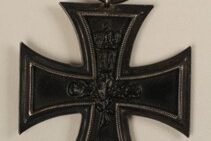
The following extract comes from a family book written by Heritage & Lineage in 2023 and covers the story of a direct relative of the family in question. The story is reproduced with the family’s permission, but some names and images are redacted for privacy. The original version includes many images, including newspaper cuttings, official certificates, census details, and photographs that we cannot reproduce due to copyright restrictions. Frederick Adolf Schroeder’s life story reads like a tale of intrigue, betrayal, and shifting identities. Born in Krefeld, Prussia, on 22 June 1858, Frederick’s early years were marked by mystery, with his birth year varying in different reports — ranging from 1854 to 1859. This variance in age is believed to have been an effort to obscure his true identity, something that would echo throughout his life. Though he was born Frederick Adolf Schroeder, he adopted different names at various points, sometimes going by Frederick Aldophus Schroeder, Frederick Aldolphus Gould, and even Fred Gould. For clarity, we’ll refer to him as Frederick from this point on. Frederick spent his early years in London studying at the Herman School in the Savoy, a German independent school, while his family lived on Soho Square. But at the age of 14, Frederick returned to Germany, a decision that took him on a path vastly different from that of your third great-grandfather, Charles. He joined the Prussian army, where he served for approximately seven years, eventually rising to the rank of captain. During this time, Frederick was awarded the Iron Cross, a prestigious military honour — before it became associated with the swastika in the 1930s. After his military service, Frederick’s journey took an unexpected turn. He emigrated to the United States, where he is said to have helped erect “sky signs,” likely the kind of advertising signs that would later become iconic in places like Times Square. By 1884, at the age of 26, Frederick had returned to England, where he married Elizabeth Fenton at Holy Trinity Church in Islington. At this point, he was listed as a clerk on the marriage certificate, with his father, Carl Ludwig Schroeder, noted as a witness. But it wasn’t long before Frederick’s life took a much stranger twist. Frederick, who had several children with Elizabeth, separated from her sometime before 1911, and Elizabeth passed away in 1912. What seemed like a normal life was about to be revealed as anything but. A Life in the Shadows Between 1907 and 1913, it emerged that Frederick had worked as a spy for the German secret service. As a former army captain and someone likely circulating in influential circles due to his business dealings, Frederick had many opportunities to cultivate connections. One of the most unexpected of these was with Maud Rebecca Solomon, a woman with a fascinating career in musical hall theatre. Maud, known for her extraordinary ability to imitate birds through whistling, had performed at renowned theatres, including the Hippodrome in London, and entertained royalty across the globe. She went by several names — Maud Sloman, Rebecca Sloman, Maud Dewey, and Madame Sabaronne — but was affectionately referred to as “The Champion Lady Whistler of the World”. After Frederick was no longer with his wife, he began a relationship with Maud. Unfortunately, their family was struck by tragedy when, in 1900, one of their children, Lionel Frederick Gould Schroeder, was tragically killed in an accident. From Pub to Spy Mission By 1911, Frederick was living in Rochester, Kent, where he was listed as the licensee of the Queen Charlotte pub. This was a stark departure from his previous life. Some of his children, now with the surname Gould, were living with him. However, his census declaration that he and Maud had been married for 28 years was untrue, as his marriage to Elizabeth had ended before 1911. Historians speculate that Frederick’s move to Rochester wasn’t simply for business. In 1907/08, the German secret service directed Frederick to acquire the license for the Queen Charlotte. This pub was frequented by military men and dockyard workers, with easy access to the Chatham Dockyard and the railway to the Continent. The German mission was clear: Frederick was to gather intelligence on the British Royal Navy. His actions were not unnoticed. Frederick’s connections to military personnel and dockyard workers were well-established. His reputation for strength and generosity—often offering a free pint to local workers—earned him respect and affection. But there was more to Frederick than met the eye. His Buffalo Lodge, a social club where military officers and non-commissioned officers were welcome, gave him even greater access to influential people. Through these relationships, Frederick gathered crucial intelligence and passed it on to German Intelligence in Ostend. A Spy in Plain Sight Frederick’s espionage activities began to draw attention from British intelligence. In 1909, he caught the attention of a newly formed unit that would later become part of MI6. Despite his German ties, Frederick was well-integrated into British society. His ability to speak perfect English, his strength, and his charm made him appear as an “English gentleman,” even though his background and secretive activities told another story. In 1911, Frederick had the unusual opportunity to attend the Coronation Naval Review, where he inspected British battleships. In the years leading up to 1914, he became increasingly involved with Irish nationalist groups like the Irish Republican Brotherhood. However, he rejected their radical plans, instead offering them cases of whisky — perhaps furthering his role in weaving a complex network of connections for his spying activities. The Fall of Frederick and Maud Frederick’s double life came to an abrupt end in August 1914, when he was arrested on charges of espionage by MI6. It was during his arrest at the Queen Charlotte pub that Frederick’s espionage activities were exposed. Authorities found documents detailing military plans and ship designs in his possession, including charts for naval operations and classified blueprints for warships. His wife, Maud, was also arrested soon after, with espionage materials found in her
Case Study: The Intriguing Life of a German Spy Read More »