


What Does A Professional Genealogist Actually Do?
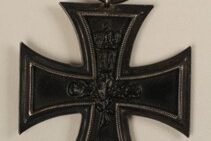
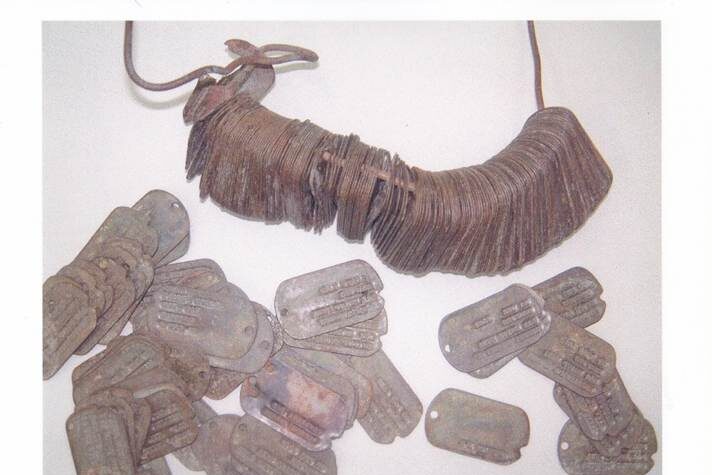
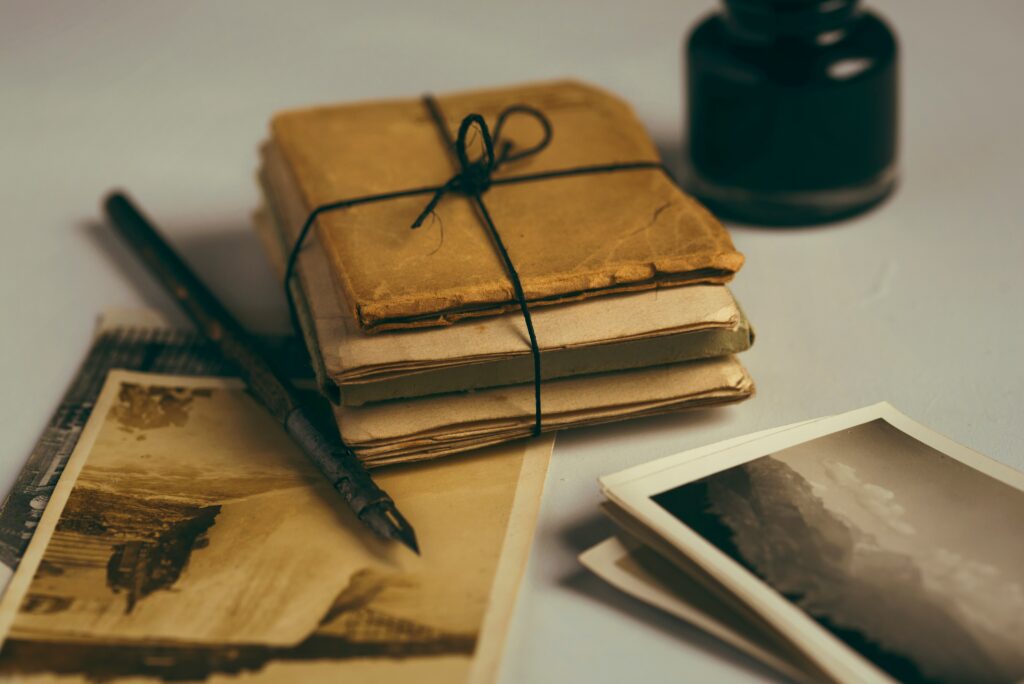
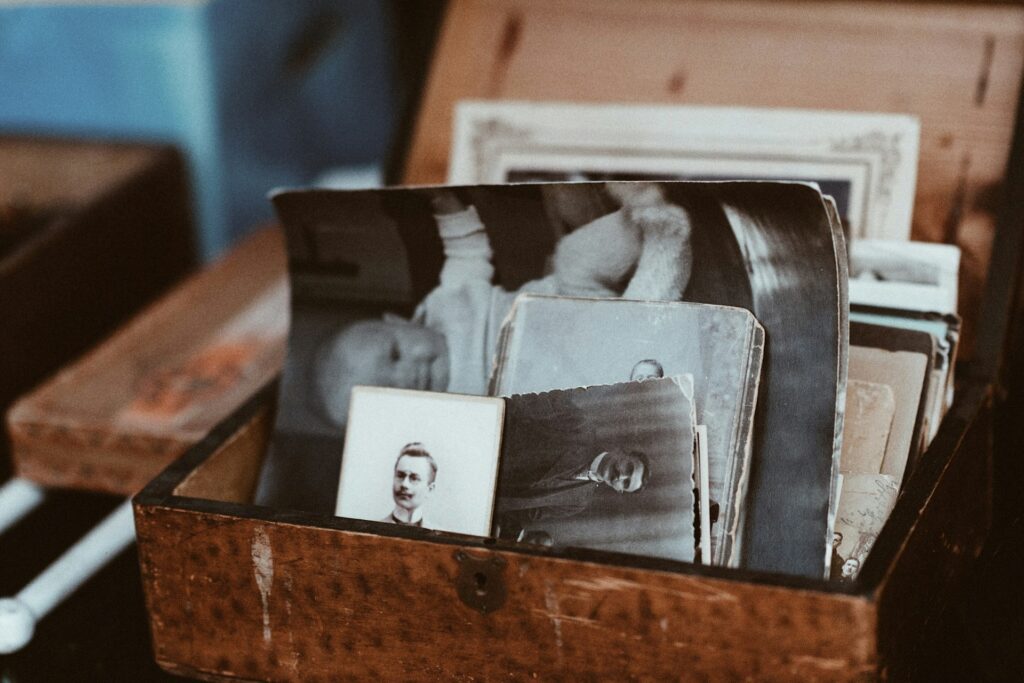
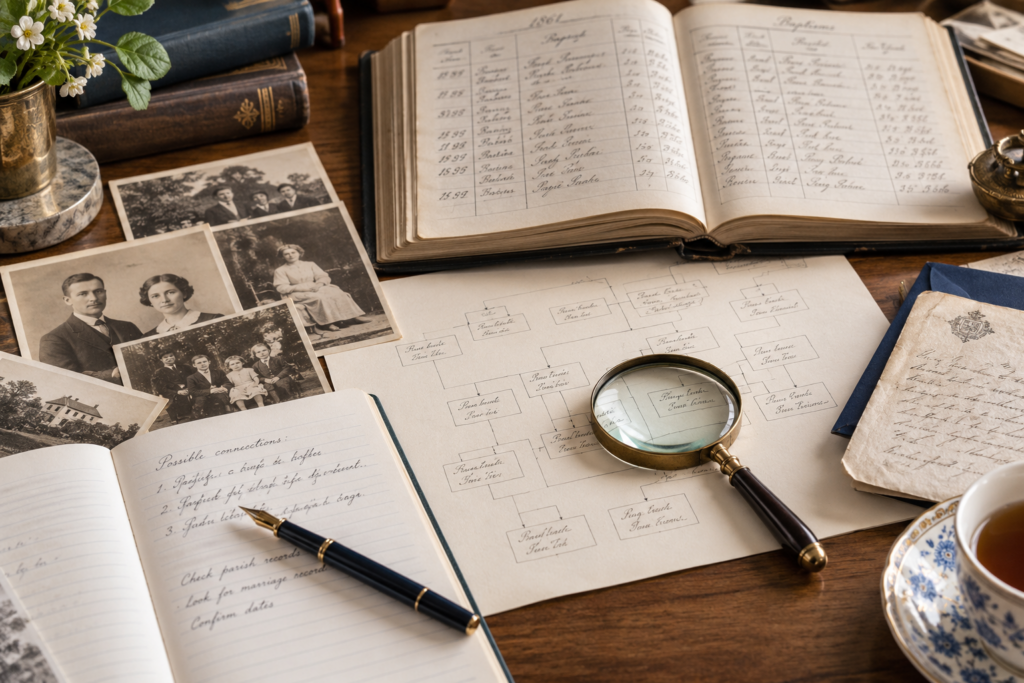
More Than Names and Dates: What Professional Genealogy Really Involves For many people, family history begins with curiosity. A surname appears in an old photograph, a relative mentions a long-forgotten story, or a DNA result raises questions about where a branch of the family may have come from. It is often possible to make an exciting start independently. Online databases have made census returns, birth records and family trees more accessible than ever before. But professional genealogy goes considerably further than adding names and dates to a digital tree. A professional genealogist researches evidence, tests connections, resolves contradictions and looks beyond the most obvious sources to establish what can genuinely be known about a family. At Heritage & Lineage Co., we take that process a stage further, placing those discoveries into their historical setting and transforming the research into a narrative that can be understood, enjoyed and preserved. Building a Family Tree Is Only the Beginning A family tree provides the structure of genealogy, but establishing an accurate one can require considerable investigation. Historical records frequently contain inconsistencies. Ages may change between censuses, surnames can be recorded under different spellings, people sometimes use middle names instead of first names, and several individuals with identical names may have lived within the same area. It can be surprisingly easy to attach the wrong person to a family tree and then unknowingly research an entirely unrelated family for several generations. Professional genealogical research therefore involves cross-referencing evidence rather than relying upon a single record or another person’s online tree. Births, baptisms, marriages, deaths, addresses, occupations, relatives and other identifying details are compared before a connection is treated as established. Where evidence remains uncertain, that uncertainty should be acknowledged rather than disguised. That careful verification is one of the fundamental differences between collecting ancestry information and conducting professional family history research. What Records Does a Professional Genealogist Use? Census records and civil registration certificates are important, but they represent only part of the available evidence. Depending upon the family and the period being researched, genealogists may investigate parish registers, wills and probate documents, military records, electoral registers, newspapers, directories, workhouse records, institutional collections, immigration documents, land records and local archives. Sometimes the most revealing information is found in sources that initially appear peripheral to genealogy. A newspaper report might describe an ancestor appearing before a magistrate. A military file could reveal a soldier’s physical description, overseas service and injuries. A will might identify property, occupations and family relationships stretching across several generations. Historical maps can help establish precisely where a family lived, while occupational and local history can reveal what everyday life in that place may have been like. Each source contributes another piece of the picture. Solving Family History Mysteries Some commissions begin not with a request for an entire family history, but with one unanswered question. Who was an unknown parent? Why did an ancestor suddenly change surname? Where did a family live before appearing in a particular town? Is a story about foreign ancestry supported by documentary evidence? These cases often require a different approach from straightforward family-tree building. A researcher may need to follow siblings, witnesses, neighbours or extended relatives rather than concentrating solely on a direct ancestor. Newspaper archives, DNA evidence, illegitimacy records, military documents and local collections may become particularly important. Occasionally, the answer comes from a source that would have been impossible to predict at the beginning of the research. That is one of the most compelling aspects of genealogy: a small clue can open an entirely new branch of a family’s story. Going Beyond Names and Dates Knowing that an ancestor was born in 1847, married in 1870 and died in 1912 tells us something. Knowing what happened between those dates is where family history becomes much more meaningful. A professional family historian can explore the wider circumstances surrounding an ancestor’s life. An occupation may lead into the history of a local industry. A change of address may reflect migration caused by industrialisation or economic hardship. Military service may place an individual within a particular battle or campaign. Even an apparently ordinary census entry can become significant when considered within its historical context. A coal miner living in the Black Country, a Huguenot silk weaver in Spitalfields or an agricultural labourer leaving the countryside for Victorian Birmingham each belonged to a much larger story of social and economic change. At Heritage & Lineage Co., this is an important part of our work. We are interested not simply in establishing who an ancestor was, but in discovering as much as the surviving evidence allows about the world in which they lived. What Happens When the Research Is Complete? Many genealogy services conclude with a research report or family tree. Our larger commissions are designed differently. Once the genealogical research has been completed and verified, we develop the discoveries into a chronological family narrative. Rather than presenting generations as disconnected sets of records, we bring together ancestry, historical context, places, occupations and significant events to create a continuous account. Photographs, maps, newspaper extracts and historical documents can be incorporated where appropriate, allowing the reader to see some of the evidence behind the story. The result is designed to be read as a family history rather than simply consulted as a reference document. For selected commissions, that narrative can then be professionally produced as a bespoke heritage book, creating a physical record that can remain within the family for future generations. Why Hire a Professional Genealogist? Researching your own ancestry can be enormously rewarding, and many of our clients have already made discoveries before approaching us. The difficulty usually comes when the straightforward records run out. Older parish registers can be difficult to interpret. Several people may share the same name. Records may contradict one another. Family stories may contain only a fragment of the truth, while significant information may be buried within archives that are not immediately obvious. There is also the question of time. A substantial
What Does A Professional Genealogist Actually Do? Read More »